Disconnection: Psychogeography of a Broken Link
I. Context: The Void After the Signal Initiated at the Mark Rothko Art Centre (Daugavpils, Latvia), this cycle was determined by formal explorations in confronting painterly emptiness and the color field. “Disconnection” is not a record of emotions, but an analytical study of the ontological rift that occurs when data transmission ceases. The project examines the state of a “broken link” not as a technical glitch, but as a sudden exposure of absence—a moment when the digital prosthesis of reality stops mediating the perception of the world.
II. The Pathology of Connectivity: Beyond FOMO The project deconstructs contemporary systemic dependencies, moving beyond superficial phenomena such as FOMO. It focuses on nomophobia and “logging stress” as symptoms of a deep colonization of the cognitive apparatus by network infrastructure. “Disconnection” analyzes the “digital umbilical cord”—the compulsion of permanent online presence—and documents the process of its violent severance. It is an inventory of states where the individual, stripped of the digital interface, is confronted with raw, non-narrative physical space.
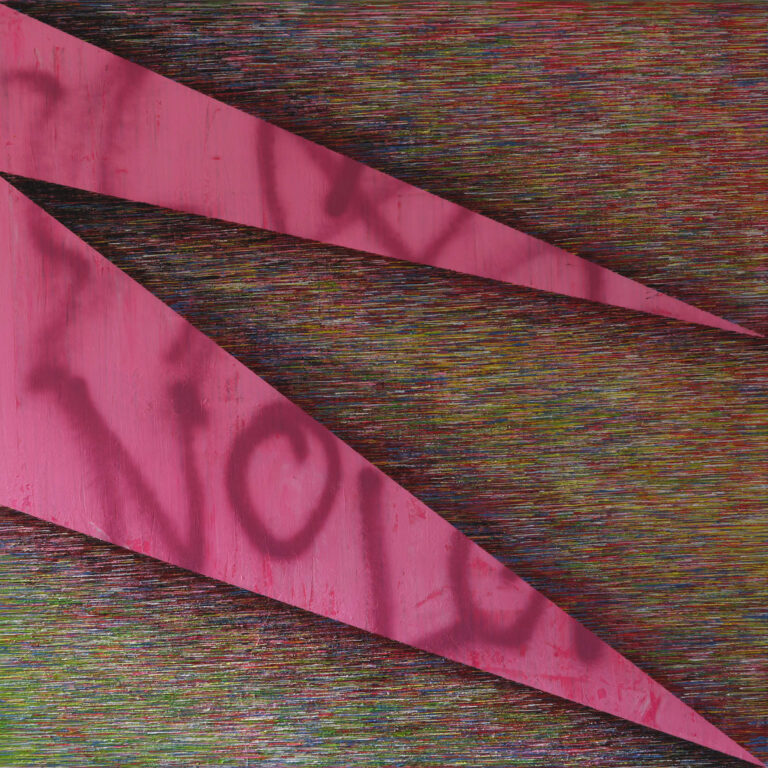
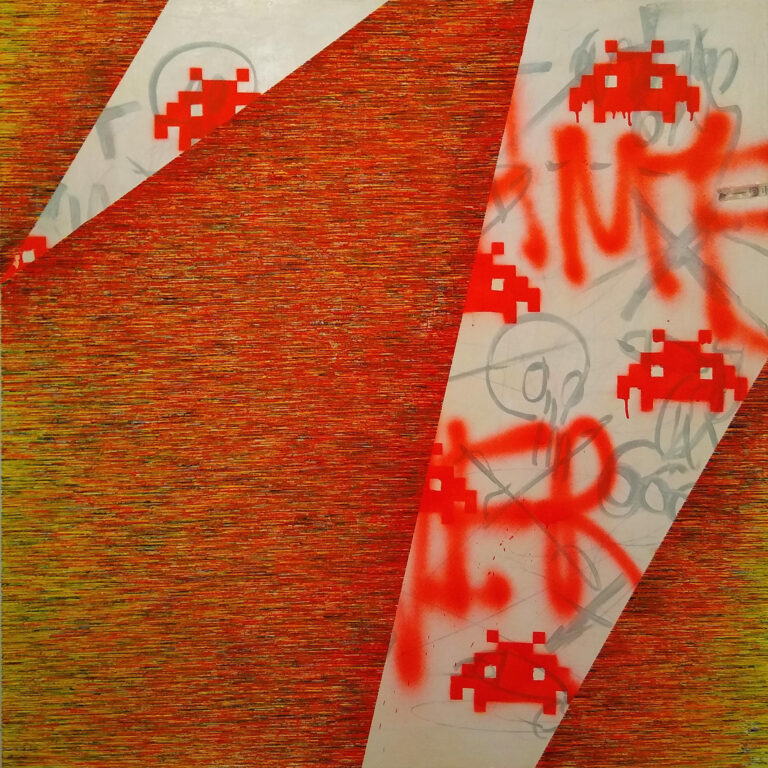
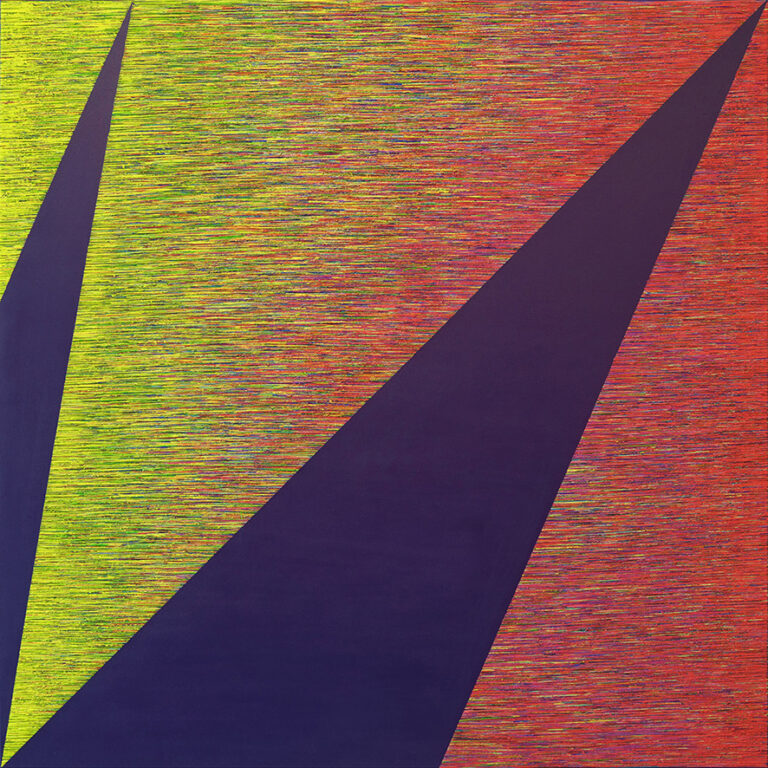
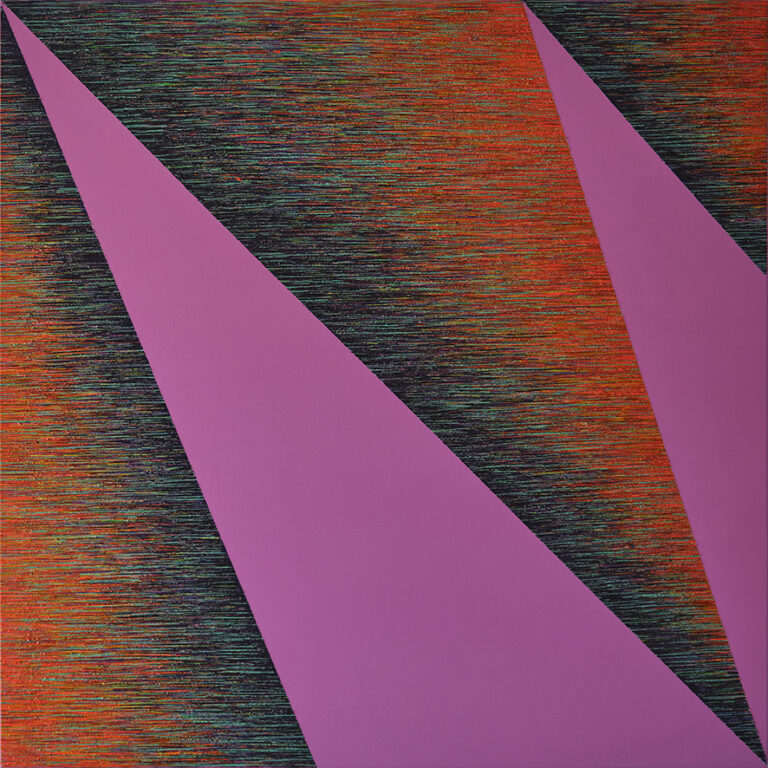
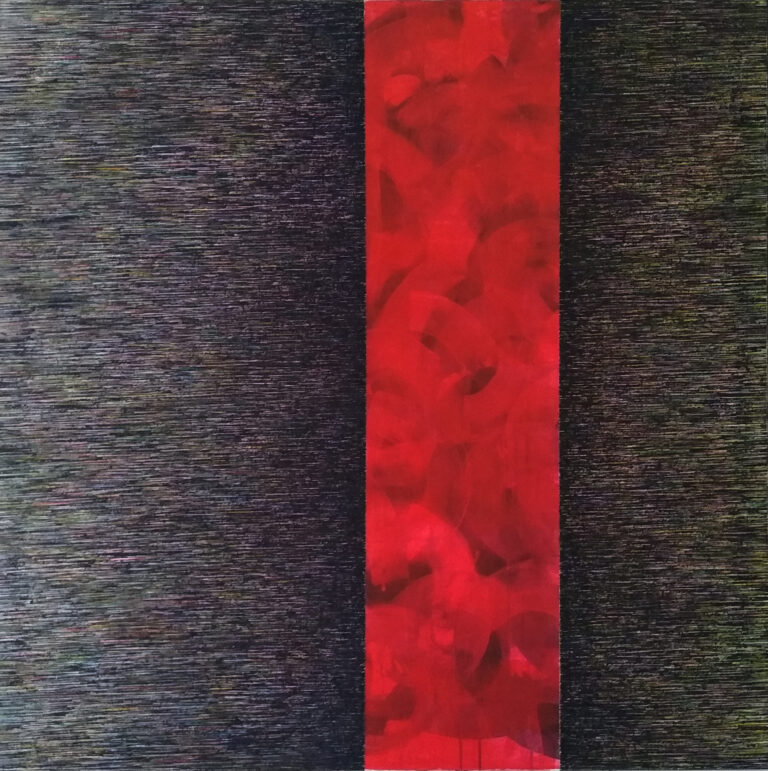
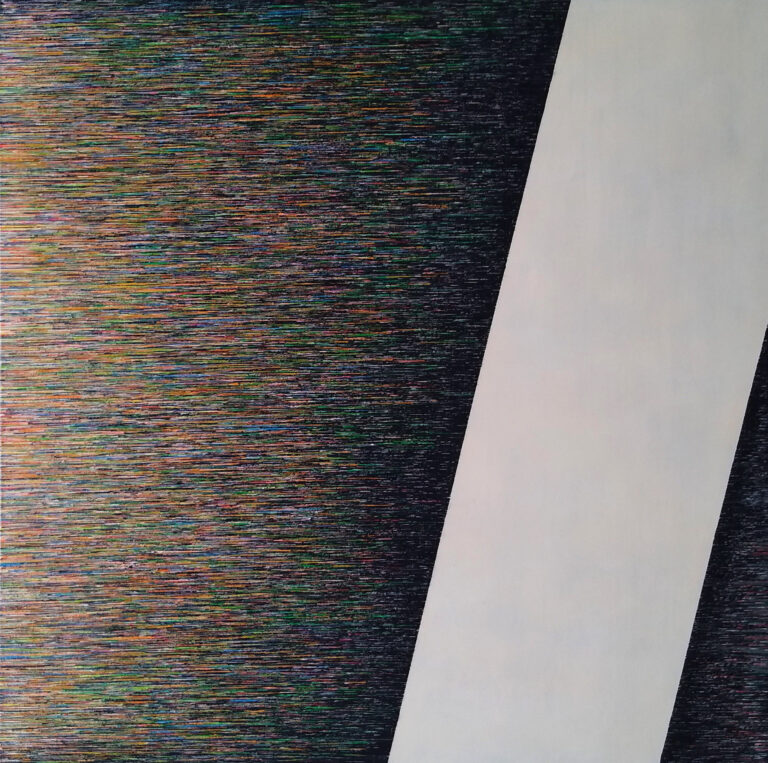
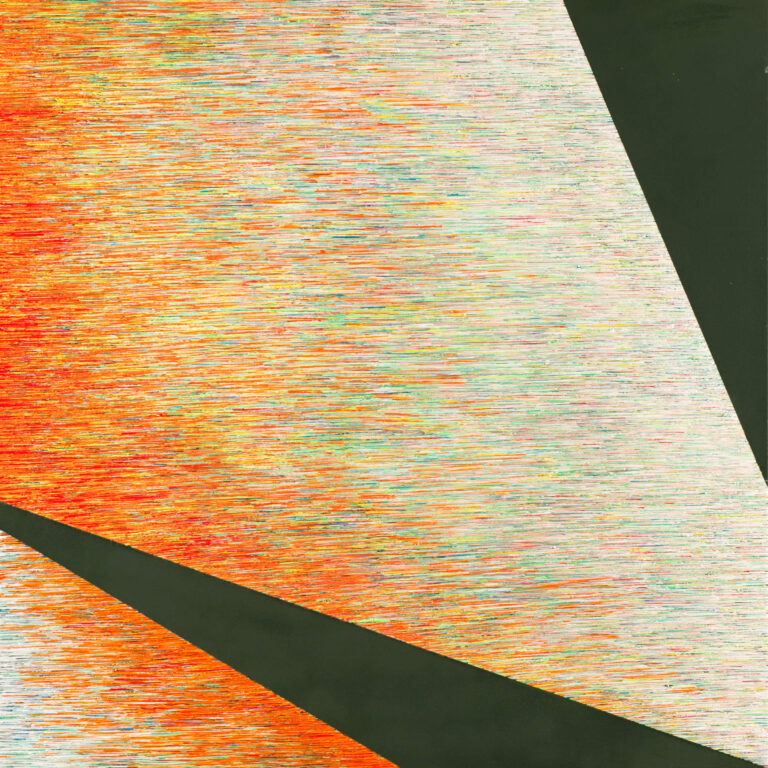
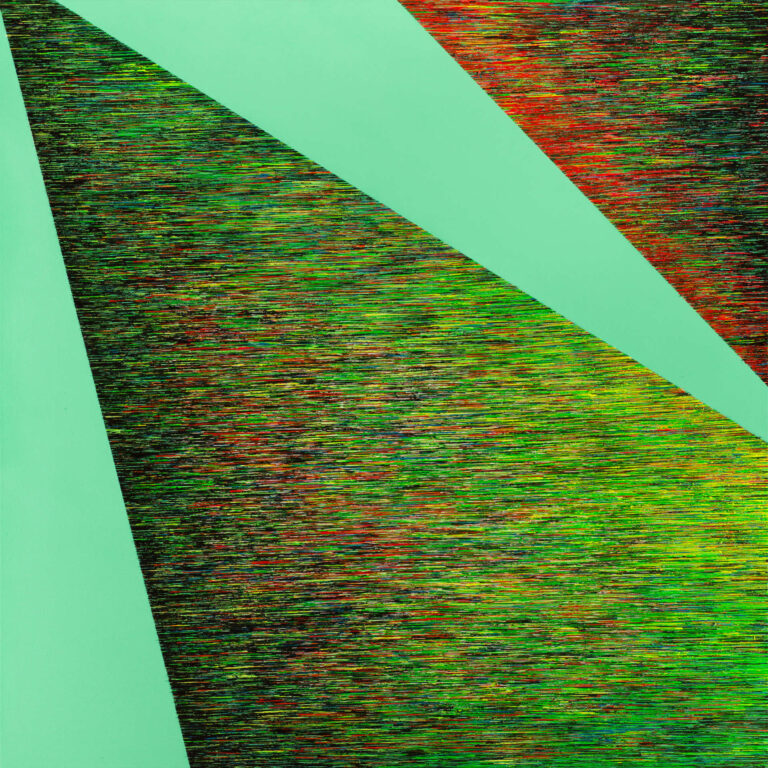
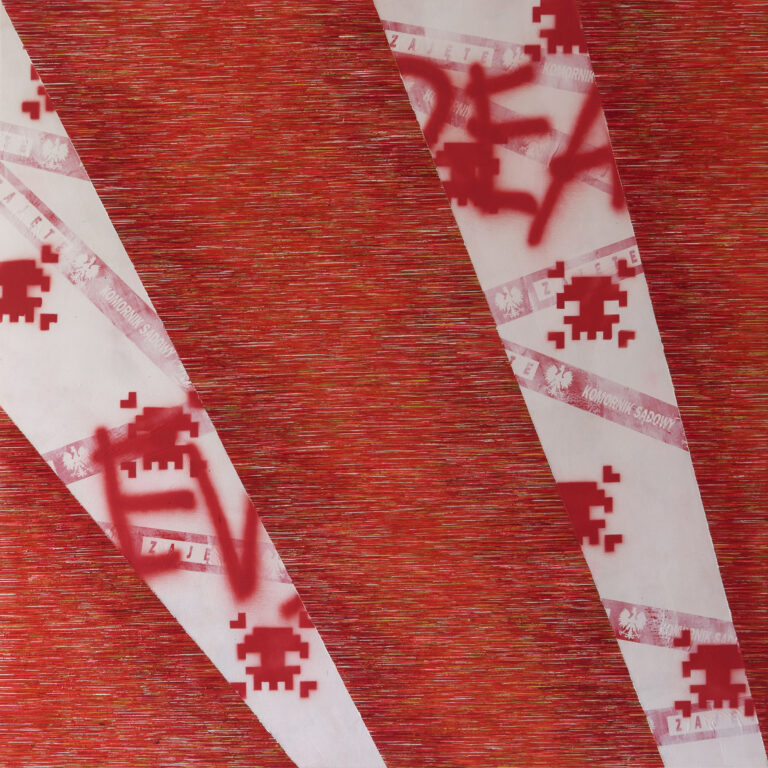
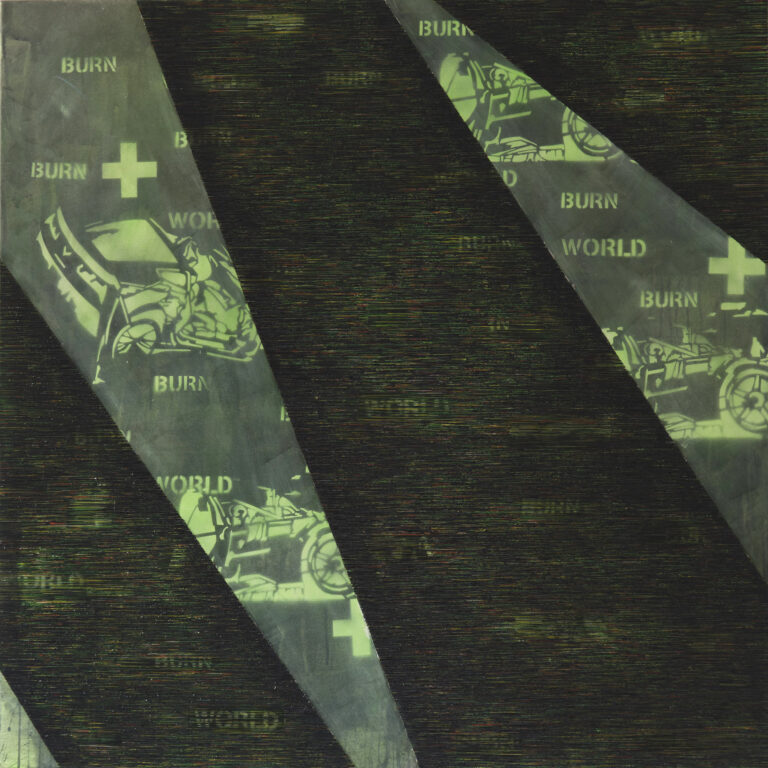
III. Formalizing the Severance: The Aesthetics of Occlusion In its formal layer, the cycle operates by disturbing the rhythm of the print painting technique. The surface of the painting is subjected to a process of visual and structural erosion. Central zones of fading pigment mimic buffering errors, where the painterly structure loses its density, revealing a painterly vacuum. The rough, layered surface of the works materializes the moment of “reality suspension”—the state between the lost signal and the physical resistance of the canvas. Painting here becomes a tool for granting material weight to what in the digital world is merely an error message.